Home›Blog ›Collimation in Radiology: Practical Guide for Safe, High-Quality X-Ray Imaging
Collimation in Radiology: Practical Guide for Safe, High-Quality X-Ray Imaging
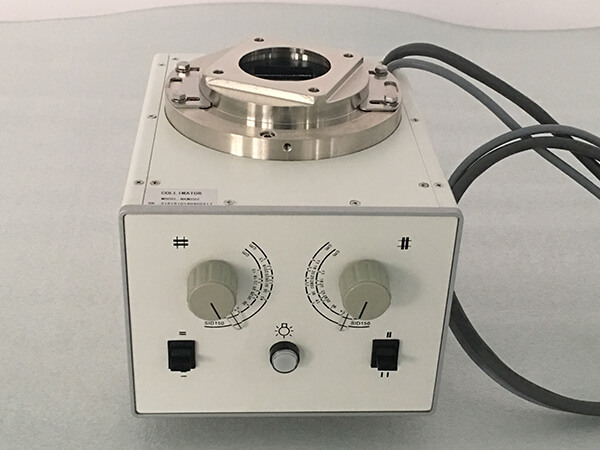
In modern diagnostic radiology, few unglamorous, foundational components deliver as much measurable value as proper X-ray collimation. It directly reduces unnecessary patient radiation exposure, eliminates image-degrading scatter, and supports consistent, high-confidence diagnostic performance across every routine X-ray exam.
Operational and Clinical Risks of Suboptimal Collimation
Most radiology departments face cascading hidden costs from inconsistent collimation, even when the root cause goes unrecognized. Without precise beam control, stray X-rays spread outside the target anatomy, exposing healthy non-indicated tissue to ionizing radiation. For pediatric, pregnant, and chronically ill patients needing repeated X-rays, this extra radiation adds up to measurable long-term safety risks no facility can ignore.
Poor collimation also generates systemic workflow inefficiencies. Scattered radiation from an unregulated X-ray beam propagates across the image detector, creating hazy, low-contrast noise that obscures fine anatomical details. This can lead radiologists to miss subtle fractures, small soft tissue lesions, or minute foreign bodies hidden behind image artifacts. Departments are then forced to schedule repeat exposures, which subject patients to additional radiation, consume technologist labor hours, and increase backlog in daily exam queues. Industry data confirms that even a 5% retake rate caused by inadequate collimation can generate dozens of unplanned operational hours annually, and erode long-term patient confidence in departmental quality standards.
How a Precision X-Ray Collimator Mitigates Core Clinical Challenges
A medical-grade X-ray collimator is a precision electromechanical assembly mounted directly at the output window of the X-ray tube housing. It utilizes layered radiation-shielding leaves fabricated from lead or tungsten alloy, which move independently to shape the X-ray beam into an exact, customizable size and geometry, restricted exclusively to the anatomical region designated for imaging. Premium integrated models incorporate a high-luminance visible light field system, which projects a clearly defined, calibrated outline onto the patient’s skin prior to X-ray emission. This allows radiologic technologists to verify exact beam boundaries in real time, preventing accidental exposure of radiosensitive organs including the thyroid, ocular structures, and gonads during routine extremity, chest, or abdominal examinations.
Measurable safety outcomes are well-documented in peer-reviewed radiology physics literature. Properly calibrated collimation reduces a patient’s total effective radiation dose by a minimum of 30% relative to uncollimated exposures, enabling full compliance with global ALARA (As Low As Reasonably Achievable) radiation safety frameworks. These protections extend to clinical staff as well: by attenuating stray X-rays at the source, a high-performance collimator reduces scattered radiation levels in the exam suite by over 80%, lowering long-term occupational exposure risk for radiologic technologists operating X-ray equipment on a daily basis.
For diagnostic image quality, the performance improvements are equally significant. By eliminating scattered radiation before it reaches the image receptor, collimation removes the diffuse grey fog that degrades contrast in final output images. The resulting scans exhibit substantially sharper edge definition, enhanced visualization of fine bone trabeculae, and a marked reduction in non-diagnostic artifacts. Radiologists can identify subtle pathological findings more rapidly, deliver more definitive diagnoses, and departmental retake rates decline measurably, freeing significant clinical time previously allocated to reprocessing substandard exposures.
Evidence-Based Selection Guidance for Radiology Departments
When evaluating or upgrading X-ray collimator hardware, radiology administrative and clinical engineering teams should prioritize three non-negotiable technical and operational criteria, beyond baseline radiation attenuation performance. First, verify full interoperability with existing X-ray infrastructure: leading collimator models are engineered for seamless integration with fixed radiography units, portable mobile X-ray systems, and fluoroscopy platforms, eliminating the requirement for full fleet replacement to achieve performance gains. Second, select units with a wide, precisely adjustable radiation field range, paired with a high-luminance light field that maintains full visibility in ambiently lit exam rooms, allowing technologists to confirm beam boundaries rapidly without operational delay. Third, prioritize systems with simplified, standardized calibration workflows: modern high-quality collimators allow clinical engineering teams to complete full quality control validation in minutes, rather than hours, minimizing equipment downtime and disruption to scheduled exam volumes.
Reputable manufacturers offer tiered configuration options, ranging from cost-effective manual collimators optimized for small outpatient clinics, to motorized automatic collimators purpose-built for high-volume hospital radiology departments processing hundreds of examinations weekly. All regulatory-compliant units adhere to international medical equipment safety certification standards, and include long-term technical support frameworks to maintain consistent performance over extended operational lifecycles.
Collimation is not a secondary consideration in the radiology workflow—it is a foundational clinical practice that enables departments to deliver safer, more accurate care to every patient. Investment in high-quality, properly maintained X-ray collimator hardware represents more than a minor component upgrade: it establishes a radiology program structured around patient safety, diagnostic accuracy, and sustained operational excellence across all clinical encounters.
Author:X Ray Collimator
X Ray Collimator
Blog
- NK103 C-Arm Collimator Replacement Guide: Compatibility & Installation Checklist
- Collimation in Radiology: Practical Guide for Safe, High-Quality X-Ray Imaging
- Application of collimator for sale to X-ray machines
- Collimator Box | Price & Specifications – Manufacturer Direct
- Latest Collimator Specs & Selection Tips
contact us
TEL:+86 19015366638
E-mail:newheekcn@163.com
Company:Weifang Newheek Electronic Tech Co., Ltd.
ADD:E Building of Future Star Scientific Innovation Industrial Zone of No.957 Wolong East Street, Yulong Community, Xincheng Sub-District Office, Weifang Hi-tech Zone, Shandong Province, China