Home›Blog ›Collimator in X-Ray Machine: A Complete Guide (Specs · Selection · FAQ)
Collimator in X-Ray Machine: A Complete Guide (Specs · Selection · FAQ)
Buying an X-ray collimator is not as simple as matching a part number. The collimator sits between the tube and the patient, and it decides three things at once: image quality, radiation dose, and whether your system passes acceptance testing. This guide explains what a collimator does in an X-ray machine, which specifications really matter, how to choose the right model for your room, and the questions overseas buyers ask us most often.
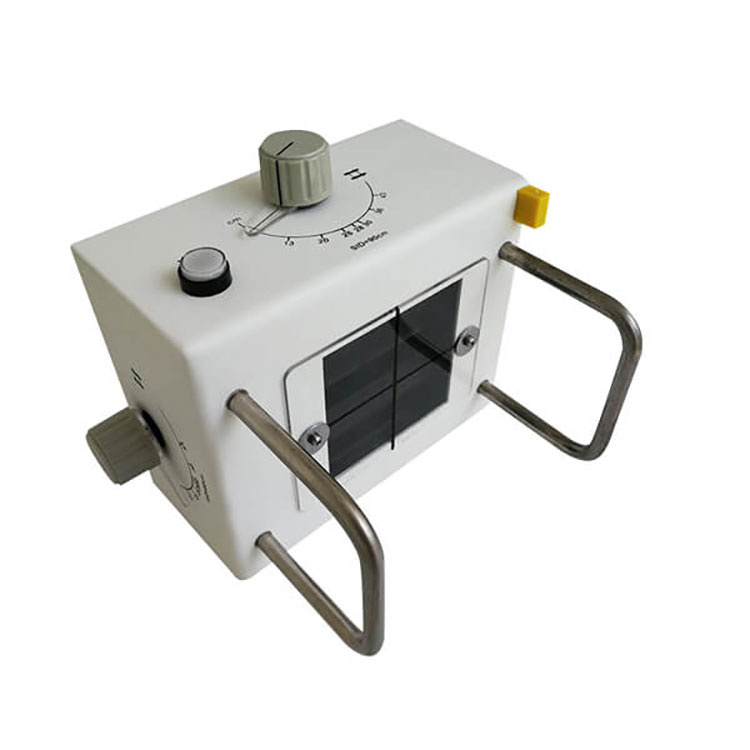
What Does a Collimator Do in an X-Ray Machine?
A collimator — also called a beam-limiting device or light beam diaphragm — shapes the X-ray beam and restricts it to the area being examined. Lead or tungsten shutters move in and out to trim the field, while a lamp and mirror project a light field that shows the technician exactly where the radiation will fall.
The benefits are immediate:
– Lower patient dose — only the region of interest is irradiated.
– Better image contrast — less scattered radiation reaches the detector.
– Less tube wear — unnecessary exposure and heat load are avoided.
In CT scanners the term refers to a different component: pre-patient and post-patient collimators define slice thickness. The selection logic below applies to radiographic, fluoroscopic, dental and mobile systems.
Key Specs to Compare
| Specification | Why it matters |
| Max tube voltage (kV) | Must exceed your generator’s maximum; typically 125–150 kV |
| Lead equivalent | Housing shielding, usually 1.5 mm or 2.0 mm Pb |
| Field size at SID | e.g. 35 × 35 cm at 100 cm — confirms the coverage you need |
| Shutter material | Lead or tungsten; tungsten allows thinner, faster shutters |
| Light field brightness | Around 100 lux at 100 cm SID for clear field definition |
| Mounting flange / interface | Must match your tube housing and tube stand |
| Drive type | Manual, automatic (motorized), or R/F |
| Options | Laser cross-hair, DAP chamber, added filters, 90° rotation |
Weight and overall length matter too — an oversized collimator can overload a mobile arm or a light tube stand.
Types of Collimators
– Manual collimators — shutters are adjusted by hand. Simple, rugged and cost-effective; the workhorse of clinics and veterinary rooms.
– Automatic (motorized) collimators — shutters track the selected cassette or detector size, speeding up workflow and keeping field sizing consistent.
– R/F collimators — built for fluoroscopy, with fast shutter response and integrated DAP.
– Dental collimators — round or rectangular cones, often with a fixed field.
– Mobile / portable units — compact and lightweight for bedside and field use.
How to Select the Right Collimator
1. Confirm kV and tube housing. The collimator must be rated above your generator’s kV and mechanically fit the tube port.
2. Calculate the field you need at your SID. If your longest SID is 180 cm, a unit specified at 100 cm will not cover the same area.
3. Match the drive to your workflow. High-throughput rooms justify automatic shutters; low-volume clinics rarely do.
4. Check dose-monitoring needs. If you report DAP, specify an integrated chamber.
5. Verify compliance. CE, ISO 13485 and FDA listings, plus test reports for lead equivalent and leakage.
6. Confirm logistics. MOQ, lead time, spare lamps and shutters, and after-sales support.
Maintenance Notes
Replace the field lamp on schedule, check shutter alignment after any tube-head service, and keep the mirror and light window clean for accurate field definition. An annual leakage and lead-equivalent test keeps the unit compliant.
FAQ
What is the main purpose of a collimator?
To limit the X-ray beam to the area of interest — cutting patient dose and scattered radiation while improving contrast.
Is a collimator the same as a grid?
No. A collimator shapes the beam at the tube; an anti-scatter grid absorbs scattered radiation near the detector. Most systems use both.
Does collimating reduce patient dose?
Yes. Tight collimation to the region of interest is one of the simplest, most effective dose-reduction measures available.
Manual or automatic — which should I buy?
Choose automatic for busy departments and consistent field sizing; manual for cost-sensitive or low-volume installations.
Can you supply a collimator for my existing tube housing?
In most cases, yes. Send your tube model, kV rating and SID, and we will match a standard flange and confirm with a drawing.
What is the typical lead time?
Usually 15–30 days, depending on configuration and order quantity.
Author:X Ray Collimator
X Ray Collimator
Blog
contact us
TEL:+86 19015366638
E-mail:newheekcn@163.com
Company:Weifang Newheek Electronic Tech Co., Ltd.
ADD:E Building of Future Star Scientific Innovation Industrial Zone of No.957 Wolong East Street, Yulong Community, Xincheng Sub-District Office, Weifang Hi-tech Zone, Shandong Province, China